
Curated with aloha by
Ted Mooney, P.E. RET

Rhodium Rings
- Everything You Need to Know about "White Gold" & Rhodium Plating
Q. What is "white gold"?
A. You'll find no ingots of white gold at Fort Knox. Pure 24 kt gold is always yellow. There is no such thing as an isotope of gold that is white.
But jewelry is rarely made from pure 24 kt gold because it's rather soft (and expensive). Engagement rings, wedding bands and jewelry are usually made from an alloy of gold plus other metals. For example:
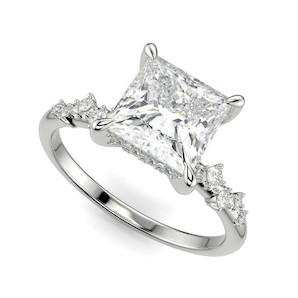
- 18 kt gold is 18/24ths gold and 6/24ths other metals
- 14 kt gold is 14/24ths gold and 10/24ths other metals,
- 10 kt gold is 10/24ths gold and 14/24ths other metals.
At the risk of slight oversimplification, if the other metals in the alloy are copper or silver, the gold remains yellow; whereas if the alloying metals are palladium and/or nickel, they have a "bleaching effect" and the mixture becomes whitish, i.e., "white gold".
Nickel is much cheaper than palladium (which is a precious metal), so nickel is widely used in white gold jewelry in the U.S. But so many people are allergic to nickel that it is forbidden in jewelry in Europe, and palladium would be used there instead.
Q. What is "Rhodium"?
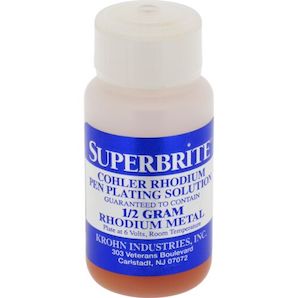
A. Rhodium is a very precious metal; rhodium can cost ten times as much as gold or more! Although Rhodium is generally not considered a feasible material to make jewelry from, because it is stressed & brittle, and very difficult to "work" properly for jewelry making, and its price is terribly volatile, Rhodium is fabulous as a plating for jewelry because it is glitteringly, dazzlingly, white and mirror-like. It's like chrome, but much whiter, and one of the most reflective of metals.
Rhodium plating makes diamonds look bigger and better because it's so bright that it glints like the diamonds. From a couple of feet away and under most lighting conditions it's hard to see where the stones end and the metal begins. Nothing sets off diamonds like rhodium plating does. So most white gold jewelry today is rhodium plated. But the rhodium is only a plating and therefore it will wear off eventually and require replating.
Q. Have things changed between your grandmother's white gold ring and yours?
A. Yes, things have changed a lot! Years ago, white gold rings were not rhodium plated, and today they usually are. So which is better and why?
Well, if you feel that heirlooms should be a once in a lifetime purchase that lasts forever without any further attention, you may not be happy with a rhodium plated ring, because rings are "high wear" items, and no matter how high the quality of the very thin plating, it will wear off over time and require replating.
But if you love today's brilliant, dazzling, ultra-white diamond-like look, recognize that you simply can't get it from an unplated ring ... and you never could. No matter how well it is made, unplated white gold can never offer the flashy glint of rhodium plating because it's a metal which is about half yellow gold. Yes, it lasted decades and never needed replating but grandma's ring was never dazzling like today's rings -- it was white enough for people's taste in a different time, but for many people it is not scintillating enough for their taste in this age of "bling".
Q. What changed?
A. You may be reading this because you are unhappy that your ring is getting "yellowish" and you want to know what is happening and why.
If today's rings were just like your grandmother's ring except with a layer of rhodium plated onto them, everyone would probably be happy. If you wanted your ring to knock your eye out you'd get it replated when needed; and if a more antique look pleased you, or you object to replating heirlooms, you'd just ask the jeweler not to plate it.
But, unfortunately, most of today's rings are not of the same alloy as your grandmother's! Once the jewelry companies recognized that "it's going to be rhodium plated anyway" they talked themselves into believing that the underlying metal didn't really need to be the pleasing white shade of your grandmother's ring. They were wrong, weren't they?

| White gold is graded by color, i.e., whether it's white enough to be left unplated -- and most of today's "white gold" is not white enough. But there are some white golds like Stuller X1 14K and W.R. Cobb's "Precise® White Gold" which are reputed to be at least as white as your grandmother's white gold. |
(If you are interested in the details, see the article "White Gold Alloys: Colour Measurement and Grading" at http://paperity.org/p/4073012/white-gold-alloys, which explains this whiteness factor).
What is happening to you is that the rhodium plating is wearing thin, and you are seeing the "yellowish" color of your "not white enough to go unplated" gold starting to show through. In fact, jewelry stores in the center aisle of shopping malls at Christmas sometimes save on inventory costs and delivery time by rhodium plating yellow gold jewelry -- and the contrast as they start to wear is terrible! You might get away with rhodium plating a yellow gold pin or brooch, because these are seldom touched and suffer very little wear, but rhodium plating a yellow gold ring that is worn regularly will probably prove very unsatisfactory.
Q. How long will rhodium plating last?
-- Buy, Sell, Care For, and Wear Gems and Jewelry Wisely" by Gerald L. Wykoff

on Amazon or eBay
or AbeBooks
(affil link)
A. This is the big question, but the answer isn't easy. First, it depends on whether the item is a ring (rings suffer a great deal of wear), or a pin or brooch which receives almost no contact. And it depends on whether you wear the ring constantly. To a minor extent it may depend on that old bugaboo "body chemistry". But the life of the plating also depends on two other very important and controllable factors --
<-- Courtesy of Metal Arts Specialties / www.artisanplating.com we offer a Powerpoint tutorial about rhodium plating which you can download if interested. Good quality plating done by a competent specialty plating shop will last far longer than a thin layer of plating applied from a teacup of contaminated plating solution in the back room of a jewelry shop.
2). What color is the underlying gold?
If the white gold underlying the rhodium plating is a nice acceptable color, like your grandmother's ring, there will be nothing jarring as the plating begins to wear a bit thin in spots, so you can go a long time between re-plating. If the color of the underlying ring is slightly yellowish, more frequent re-plating will be necessary because the item will look poorly much sooner. And if the underlying material is strongly yellow or is actually yellow gold, the contrast will be dramatic, and replating will be required quite frequently.
Yes, you can get your yellow gold jewelry rhodium plated if you wish, but if the piece experiences significant wear, the good appearance may last only a fairly short time even if the rhodium plating quality is good, and almost no time if the plating is poor.
Conclusion: If possible, try to make sure that the white gold jewelry you are buying is a good shade of white before plating so that there will be little contrast as the rhodium plating gets thin. And if your jewelry store can't rhodium plate the jewelry well enough for an acceptable life, try to find another jeweler or a specialty plating shop who can.
Good luck with your ring, and if you found this page informative, please tell others about it. If you would like to hear some other opinions on white gold and rhodium plating, and hear other people's tales of satisfaction or dissatisfaction, this site has dozens of public forum threads on this topic, including this sampling: